Linear modules are essential components in modern industrial automation systems. They are widely used in robotics, automated assembly lines, packaging equipment, semiconductor machinery, and CNC systems. However, during operation, some users may experience vibration, shaking, jerky movement, or stuttering in a linear module, which can negatively affect positioning accuracy, production efficiency, and equipment lifespan.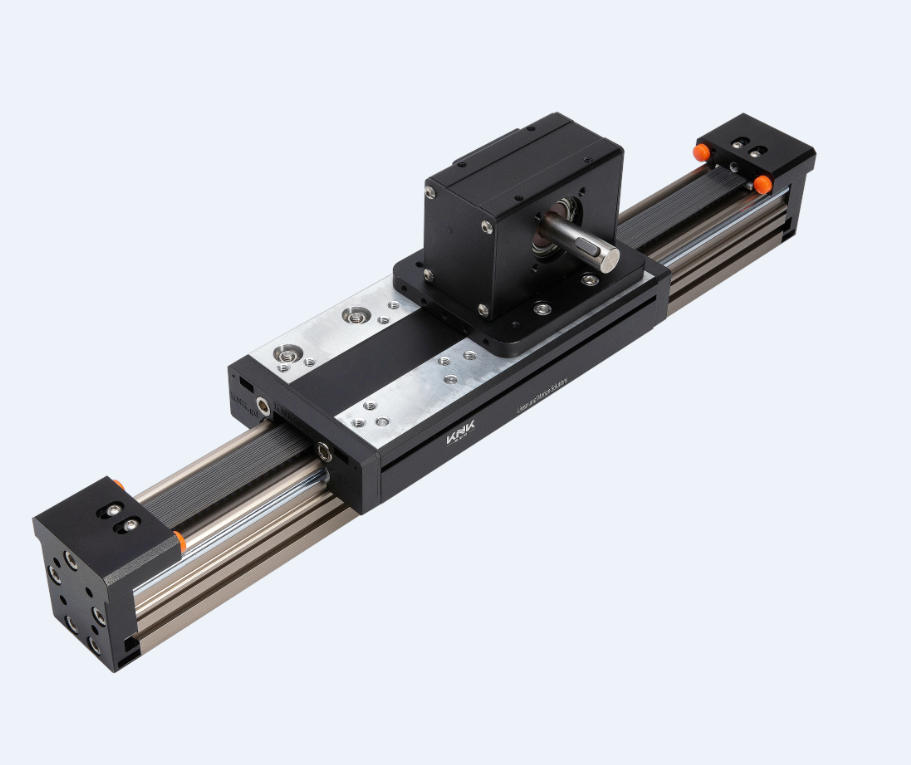
For OEM manufacturers, automation engineers, and maintenance teams, identifying the root cause quickly is critical to maintaining reliable system performance.
This article explains the most common causes of linear module vibration and stuttering and provides practical troubleshooting solutions.
A malfunctioning linear motion system may exhibit the following symptoms:
These issues can originate from mechanical, electrical, control system, or installation problems.
One of the most common causes of linear module vibration is excessive payload.
Overloading can significantly reduce system stability and component lifespan.
The guide rail system directly affects motion smoothness.
Proper maintenance of guide rails is essential for smooth operation.
In belt driven linear modules, incorrect belt tension frequently causes vibration and positioning instability.
Correct belt tension improves both motion accuracy and operational stability.
For ball screw linear actuators, screw wear or poor lubrication can cause motion irregularities.
Proper ball screw maintenance ensures smooth and precise movement.
Mechanical components are not always the source of vibration. Motion control settings can also create instability.
Motion control optimization often solves vibration problems without replacing hardware.
Improper installation can introduce stress into the system and create movement irregularities.
Precision installation is critical for high-performance automation equipment.
External conditions can affect linear module performance.
Harsh environments often require customized protection designs.
| Problem | Possible Cause | Recommended Solution |
|---|---|---|
| Shaking during acceleration | Excessive load or servo tuning issue | Optimize parameters and verify load |
| Jerky movement | Poor lubrication or rail contamination | Clean and lubricate guide system |
| Vibration at high speed | Incorrect belt tension | Adjust or replace timing belt |
| Positioning instability | Encoder or control problem | Inspect servo feedback system |
| Uneven movement | Rail misalignment | Reinstall and align guide rails |
| Continuous vibration | Mechanical resonance | Modify motion profile and tuning |
Many vibration issues occur because standard products are used in demanding or specialized applications. OEM manufacturers often choose custom linear module solutions to optimize performance.
Customization options include:
Custom-engineered systems provide better reliability and smoother operation in demanding industrial environments.
When sourcing a linear motion system, consider suppliers that offer:
A professional supplier can help prevent vibration and stuttering issues before the system is even installed.
When a linear module vibrates, shakes, or stutters during operation, the problem is usually linked to load conditions, guide rail maintenance, belt tension, ball screw wear, servo tuning, installation accuracy, or environmental factors.
By following a systematic troubleshooting process, engineers can quickly identify the root cause and restore smooth, accurate operation.
For OEM manufacturers and automation integrators, investing in high-quality, customized linear motion systems is one of the most effective ways to improve reliability, reduce downtime, and maximize production efficiency.