In today's automated manufacturing environment, speed, efficiency, and reliability are critical factors for production success. Among the various linear motion technologies available, the belt driven linear guide has become one of the most popular solutions for applications requiring fast movement, long travel distances, and cost-effective automation.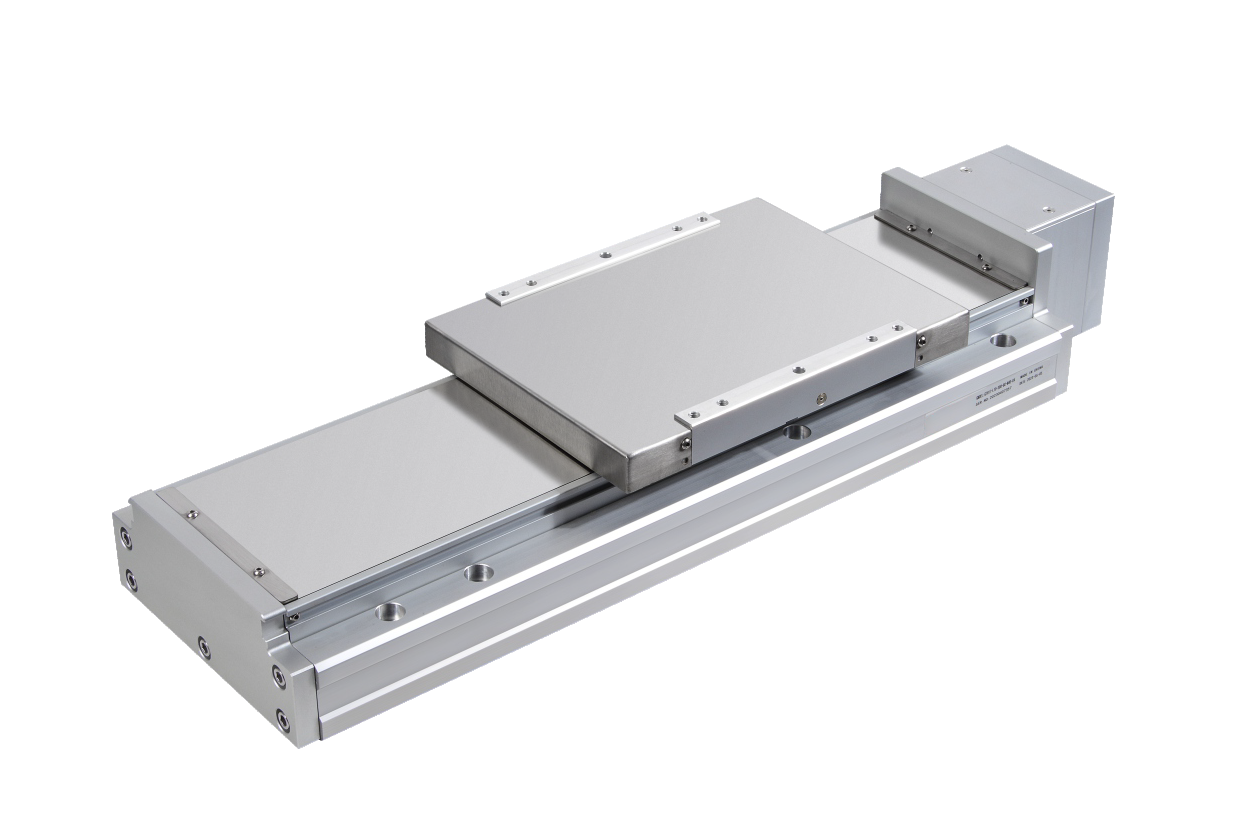
For OEM manufacturers, machine builders, and automation system integrators, customized belt driven linear guide systems offer an excellent balance of speed, flexibility, and performance.
A belt driven linear guide is a linear motion system that combines a precision linear guide rail with a timing belt drive mechanism. The motor rotates a drive pulley, which moves the timing belt and transfers motion to the carriage, creating smooth and controlled linear movement.
Typical components include:
This design enables high-speed motion while maintaining stability and repeatability.
The operating principle is straightforward and highly efficient.
A servo motor or stepper motor generates rotational movement.
The motor drives the pulley, which moves the timing belt.
The carriage is connected to the timing belt and travels along the linear guide rail.
The linear guide rail ensures smooth movement, minimizes friction, and maintains positioning accuracy.
The result is a reliable linear motion system capable of handling demanding industrial automation tasks.
One of the biggest advantages of a belt driven linear guide is its ability to achieve high travel speeds and rapid acceleration.
Benefits include:
This makes belt-driven systems ideal for high-throughput manufacturing environments.
Unlike some ball screw systems that become less practical over long distances, belt-driven guides are well suited for:
Long-stroke capability provides greater design flexibility for OEM equipment.
For many automation projects, a belt driven linear guide system offers an excellent balance between performance and cost.
Advantages include:
Modern timing belt technology provides:
This improves both machine performance and operator comfort.
When selecting a motion solution, engineers often compare these two technologies.
Advantages:
Best suited for:
Advantages:
Best suited for:
The optimal solution depends on the application's speed, load, and accuracy requirements.
Used for automated transportation and positioning systems.
Provides fast and reliable movement along X, Y, and Z axes.
Improves productivity through automated product handling.
Supports precision transport and assembly processes.
Optimizes workflow and production efficiency.
Every automation project has unique requirements. Standard products may not provide the optimal performance needed for specialized equipment.
A custom belt driven linear guide can be designed with:
Customization improves machine integration and overall production efficiency.
When choosing a supplier, consider:
Look for manufacturers with extensive automation and motion control expertise.
Ensure the supplier can support OEM and project-specific requirements.
Evaluate machining precision, assembly standards, and quality control procedures.
Strong technical support helps optimize system design and reduce implementation risks.
Reliable production and delivery schedules are essential for OEM projects.
As Industry 4.0 and smart manufacturing continue to evolve, belt driven linear guide systems are becoming increasingly intelligent through:
These advancements help manufacturers achieve higher productivity and lower operating costs.