In modern industrial automation, smooth and controlled linear movement is essential for equipment performance. From linear modules and robotic systems to automated assembly equipment, the quality of the guiding components directly affects positioning accuracy, operating stability, and service life.
A Linear Bearing provides low-friction linear movement while supporting a moving component along a shaft or guide system. Depending on the application, different bearing structures can be selected according to load, speed, accuracy, installation method, and operating environment.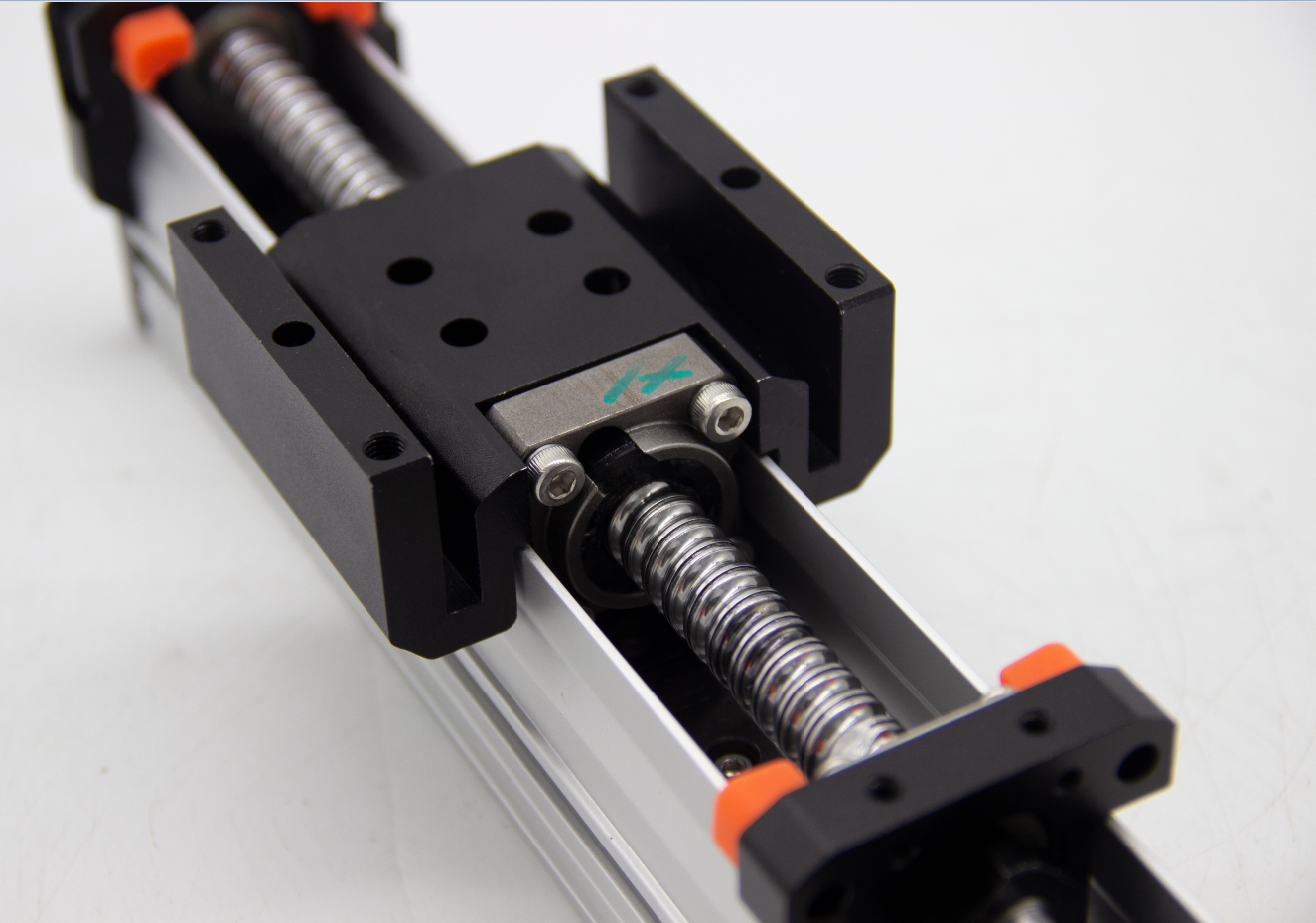
For OEM machine builders and automation integrators, a custom linear bearing solution can be particularly useful when standard bearing dimensions or performance characteristics cannot fully match the equipment design.
A linear bearing is a mechanical component designed to allow controlled linear movement between two surfaces.
Unlike conventional rotary bearings that primarily support rotational movement, linear bearings are designed for applications where a component needs to travel along a straight path.
A linear bearing system may include:
The bearing reduces friction between the moving and stationary components, allowing the carriage or machine element to travel smoothly along the guide path.
The basic principle of a linear bearing is to reduce friction during linear movement.
Depending on the bearing type, the movement may be achieved through:
For example, in a ball-type linear bearing, balls circulate inside the bearing while the carriage moves along a precision shaft or guide rail.
The simplified motion process is:
Motor Force → Moving Carriage → Linear Bearing → Guided Linear Movement
This low-friction movement helps improve motion efficiency and reduce mechanical resistance.
A linear bearing may be a relatively small component, but its performance can influence the entire motion system.
A properly selected bearing can help achieve:
Reduced friction allows the moving assembly to travel with less resistance.
A stable guide system helps maintain consistent movement during repeated cycles.
Proper load distribution can reduce unnecessary wear on guide components.
Selecting the correct bearing according to load and operating conditions can improve overall system durability.
Different applications require different bearing structures.
Ball linear bearings use recirculating balls to reduce friction.
They are commonly used for:
They are suitable when smooth movement and low friction are important.
Linear guide bearings are commonly integrated with precision guide rails and blocks.
They can provide:
This type of configuration is frequently used in industrial linear modules.
Plain linear bearings use sliding surfaces instead of recirculating balls.
Depending on material and design, they can be useful in applications where:
These two terms are sometimes used interchangeably, but they can refer to different components.
| Feature | Linear Bearing | Linear Guide |
|---|---|---|
| Main Function | Reduce friction and guide movement | Provide precision guided movement |
| Typical Structure | Bearing + shaft | Rail + carriage/block |
| Load Capacity | Application dependent | Generally high |
| Rigidity | Depends on configuration | Generally high |
| Precision | Depends on design | High |
| Common Applications | General linear motion | Precision automation |
The appropriate choice depends on the machine structure and required performance.
Standard linear bearings are suitable for many applications, but OEM equipment often has unique requirements.
A custom linear bearing can be developed around:
Instead of adapting the machine to a standard bearing, the motion system can be designed around the actual equipment requirements.
For OEM manufacturers, customization can involve more than simply changing the bearing size.
A supplier may need to consider the complete motion system.
The bearing needs to support the actual moving load and external forces.
Important parameters include:
Higher travel speeds can increase friction, heat generation, and wear.
The bearing selection should therefore consider:
Precision automation applications may require careful control of:
These factors can influence positioning repeatability and system stability.
For industrial applications, the bearing may need to operate in environments involving:
The bearing material and sealing configuration should be selected accordingly.
Linear bearings are used across many industrial automation applications.
A linear bearing or guide system provides stable carriage movement for:
Linear bearings can be used in:
Applications include:
Smooth linear movement contributes to consistent assembly operations.
Linear bearing systems can support:
Precision linear guidance is essential for:
Choosing the correct linear bearing should start with the actual application requirements.
Determine the total moving load and external forces.
Consider maximum speed as well as acceleration and deceleration.
The required travel distance affects the guide structure and shaft or rail configuration.
Define the required positioning accuracy and repeatability.
Horizontal, vertical, and angled installations may have different load requirements.
Consider contamination, temperature, moisture, and lubrication requirements.
For continuous production, bearing life should be evaluated based on load, speed, duty cycle, and operating conditions.
For many OEM applications, the bearing should not be evaluated as an isolated component.
A complete linear motion system may include:
Motor + Drive Mechanism + Linear Bearing + Guide Rail + Carriage + Controller
For example, a custom linear module may combine a ball screw, linear guide, servo motor, and linear bearing system to achieve precise positioning.
This system-level approach allows engineers to optimize:
When purchasing linear bearings for standard equipment, product availability and price may be the main concerns.
For customized OEM applications, engineering capability becomes equally important.
A professional supplier should be able to provide:
This is especially important when the linear bearing is part of a complete automated motion system.
The terms linear bearing and linear bushing are sometimes used differently depending on the supplier and product design.
In general, a linear bushing commonly refers to a bearing that moves along a cylindrical shaft, while linear bearing can be used as a broader term covering different linear rolling or sliding bearing configurations.
When sourcing components, OEM engineers should verify the exact:
rather than selecting a component based solely on its name.