Kategorien

Why Is My Linear Module Not Positioning Accurately? Causes and Solutions for Motion Accuracy Problems

Discover the common causes of inaccurate positioning in linear modules, including mechanical wear, servo tuning, load issues, and installation errors. Learn how to improve motion accuracy in industrial automation systems.
Jun 13th,2026 125 Ansichten

Why Does a Linear Module Experience Inaccurate Positioning?

In modern industrial automation, positioning accuracy is critical for ensuring product quality, production efficiency, and equipment reliability. Whether used in robotics, semiconductor manufacturing, packaging systems, or automated assembly lines, a linear module must repeatedly move to the correct position with high precision.
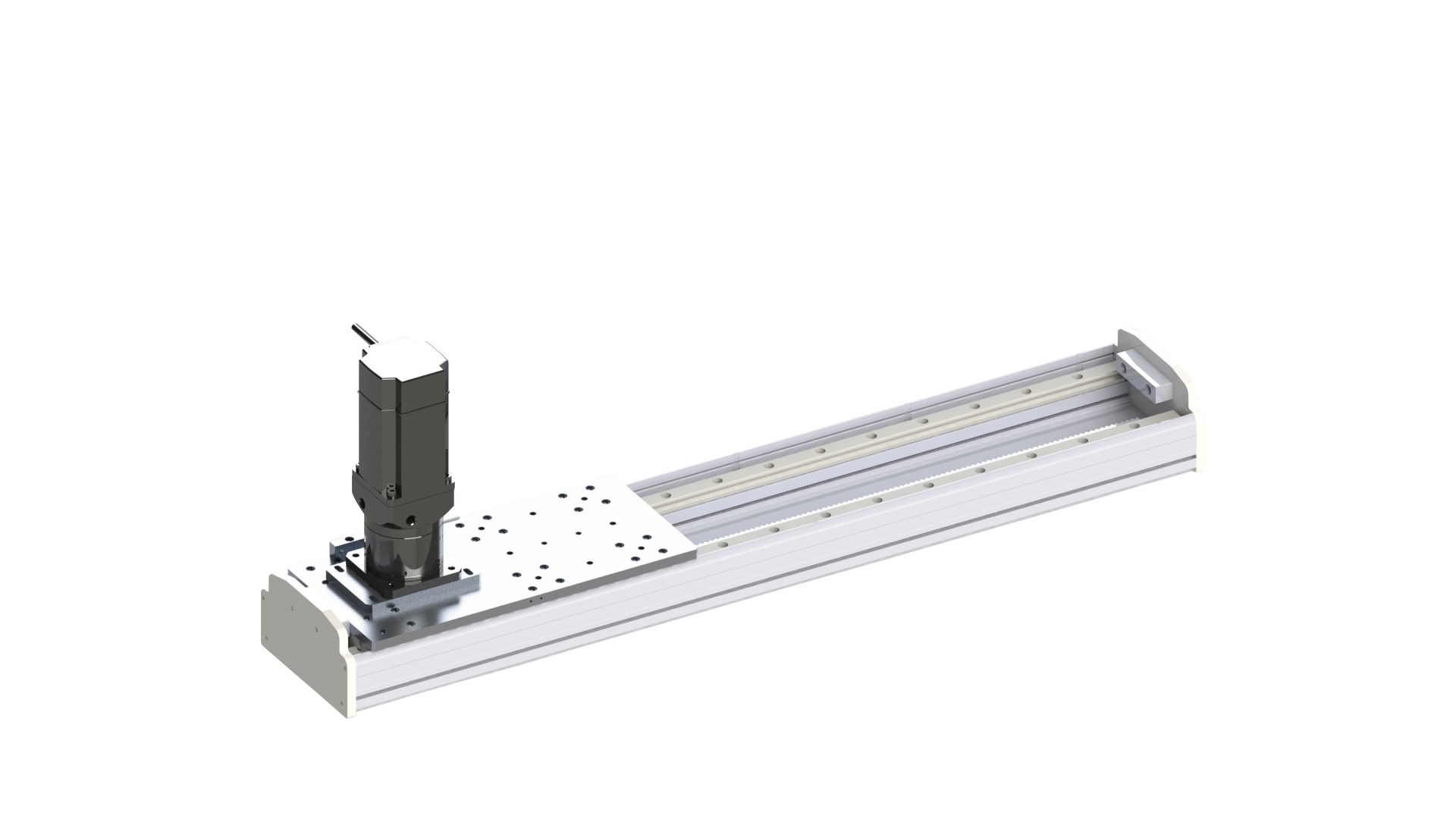
Linear Module

However, many engineers encounter a common issue: the linear module does not stop at the expected position, resulting in inaccurate movement or positioning errors.

For OEM manufacturers, machine builders, and automation integrators, understanding the root causes of linear module positioning inaccuracies is essential for maintaining high-performance automation systems.


What Is Positioning Inaccuracy in a Linear Module?

Positioning inaccuracy occurs when the actual position of the linear module differs from the commanded position.

Common symptoms include:

  • Repeated positioning deviations
  • Offset after multiple operating cycles
  • Inconsistent product placement
  • Reduced assembly precision
  • Failed inspection or quality checks
  • Increased machine downtime

If left unresolved, positioning errors can directly impact production quality and operating costs.


Common Causes of Inaccurate Linear Module Positioning

Several mechanical, electrical, and control-related factors can affect precision linear motion performance.


1. Step Loss or Servo Tracking Errors

One of the most common causes is the motor failing to accurately follow motion commands.

Symptoms:

  • Position offset gradually increases
  • Errors become worse at higher speeds
  • Repeatability decreases

Possible Causes:

  • Excessive acceleration
  • Motor overload
  • Insufficient motor torque
  • Improper servo tuning

Solution:

  • Optimize motion parameters
  • Verify motor sizing
  • Adjust servo gain settings
  • Reduce acceleration if necessary

Proper motor control is essential for accurate positioning.


2. Mechanical Wear in the Transmission System

Over time, wear can develop in the motion transmission components.

Common Components:

  • Timing belts
  • Ball screws
  • Couplings
  • Bearings

Symptoms:

  • Increased backlash
  • Position drift
  • Reduced repeatability

Solution:

  • Perform regular inspections
  • Replace worn components
  • Follow preventive maintenance schedules

Mechanical wear is a leading cause of long-term positioning degradation.


3. Timing Belt Stretching or Slippage

For belt driven linear modules, timing belt issues can directly affect positioning accuracy.

Symptoms:

  • Position offset after repeated operation
  • Inconsistent stopping points
  • Reduced synchronization

Solution:

  • Check belt tension
  • Inspect pulley condition
  • Replace worn belts

Proper belt maintenance helps maintain consistent motion accuracy.


4. Ball Screw Backlash

For ball screw linear modules, backlash can reduce positioning precision.

Symptoms:

  • Direction reversal errors
  • Repeatability problems
  • Small but consistent positioning deviations

Solution:

  • Use preloaded ball nuts
  • Inspect screw wear
  • Replace damaged components

High-quality ball screw assemblies help minimize backlash.


5. Linear Guide Rail Problems

The guide rail system directly affects motion smoothness and accuracy.

Common Issues:

  • Rail contamination
  • Insufficient lubrication
  • Guide block wear
  • Installation misalignment

Symptoms:

  • Increased resistance
  • Uneven movement
  • Reduced positioning consistency

Solution:

  • Clean guide rails regularly
  • Lubricate according to maintenance schedules
  • Verify alignment during installation

A properly maintained guide system improves motion precision.


6. Improper Installation and Alignment

Even the highest-quality linear module can experience positioning errors if installed incorrectly.

Common Problems:

  • Uneven mounting surfaces
  • Structural deformation
  • Rail misalignment
  • Loose fasteners

Solution:

  • Verify installation flatness
  • Check alignment tolerances
  • Tighten all mounting hardware

Proper installation is critical for achieving design-level accuracy.


7. Excessive Load or Moment Force

Operating conditions outside the module's design specifications can affect positioning performance.

Symptoms:

  • Increased vibration
  • Servo overload alarms
  • Positioning instability

Solution:

  • Verify payload calculations
  • Minimize off-center loads
  • Select a higher-capacity module when necessary

Correct load selection improves both precision and equipment lifespan.


8. Encoder and Feedback System Issues

Modern servo-driven systems rely on feedback devices for accurate positioning.

Symptoms:

  • Random positioning errors
  • Servo alarms
  • Inconsistent repeatability

Solution:

  • Inspect encoder connections
  • Verify feedback signal quality
  • Replace faulty sensors if required

Accurate feedback is essential for closed-loop motion control.


How Environmental Factors Affect Positioning Accuracy

Industrial environments can also influence motion performance.

Potential Problems:

  • Dust contamination
  • Temperature fluctuations
  • Vibration from nearby equipment
  • Humidity exposure

Recommended Solutions:

  • Use sealed linear modules
  • Install protective covers
  • Maintain a clean operating environment

Environmental protection helps preserve long-term positioning accuracy.


How to Improve Linear Module Positioning Accuracy

To achieve stable and repeatable motion performance, consider the following best practices:

Regular Maintenance

Inspect guide rails, belts, screws, and bearings.

Proper Lubrication

Reduce friction and component wear.

Motion Profile Optimization

Use appropriate speed and acceleration settings.

Precision Installation

Ensure accurate alignment and mounting.

High-Quality Components

Choose reliable motion control and transmission systems.

Routine Calibration

Verify positioning performance periodically.

These measures significantly improve automation system reliability.


Why Custom Linear Modules Deliver Better Accuracy

Many OEM projects have unique performance requirements that standard products cannot fully satisfy.

Custom precision linear motion systems can be engineered with:

  • High-rigidity structures
  • Precision ball screw drives
  • Advanced servo control systems
  • High-accuracy linear guides
  • Enhanced feedback systems
  • Application-specific tuning

Customized designs provide higher accuracy, better repeatability, and improved long-term performance.


Choosing the Right Linear Module Manufacturer

When selecting a supplier, evaluate:

Engineering Expertise

Can they analyze your application requirements?

Custom Design Capability

Can they provide application-specific solutions?

Manufacturing Precision

Do they maintain strict quality standards?

Technical Support

Can they assist with troubleshooting and optimization?

Working with an experienced manufacturer helps minimize positioning problems and maximize system performance.


Conclusion

Inaccurate positioning in a linear module can result from mechanical wear, motor control issues, transmission errors, installation problems, excessive loads, or environmental factors.

By systematically analyzing each part of the motion system, engineers can identify the root cause and restore precision operation.

For OEM manufacturers and automation integrators, selecting high-quality, customized linear motion systems is one of the most effective ways to ensure long-term positioning accuracy, production consistency, and equipment reliability.

Eine Nachricht hinterlassen
Ihr Name
Kontaktinformationen*
Name der Firma*
Inhalt
Bitte geben Sie den Inhalt Ihrer Anfrage ein.