As manufacturers strive to lower operating costs and achieve sustainable production, energy efficiency has become a major consideration in automation equipment design. While motors and control systems often receive the most attention, the choice of a belt driven linear module can also have a significant impact on overall power consumption.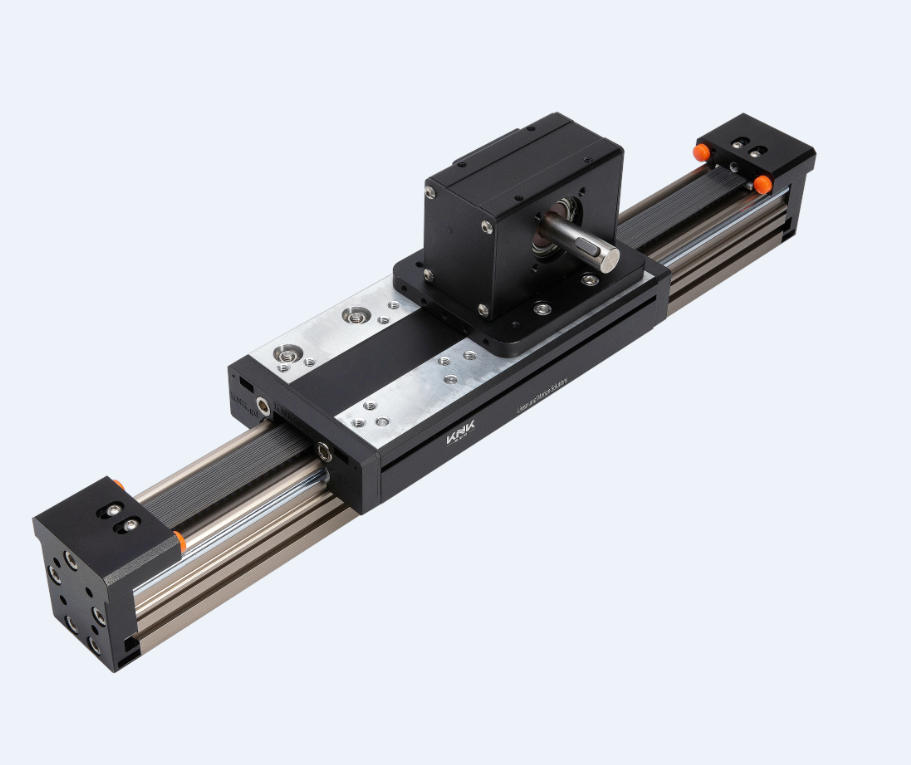
Compared with poorly matched motion systems, a well-designed belt driven linear module can reduce energy usage while maintaining high speed, smooth operation, and reliable positioning. For OEM machine builders and automation integrators, selecting the right linear module is an effective way to improve both machine performance and long-term operating costs.
In this article, we'll explore the key factors that influence energy consumption and explain how custom belt driven linear modules help manufacturers build more efficient automation systems.
Modern production lines often operate 16–24 hours a day. Even a small reduction in power consumption can result in substantial savings over the lifetime of the equipment.
An energy-efficient linear motion system can help manufacturers:
Energy savings are particularly valuable for high-speed production lines with multiple motion axes.
One of the biggest advantages of a belt driven linear module is its lightweight moving structure.
Compared with some screw-driven systems, the moving components typically have lower inertia, allowing the motor to:
This makes belt-driven modules especially suitable for high-speed automation.
A precision timing belt efficiently transfers motor power to linear motion with minimal mechanical loss.
Benefits include:
Proper belt tension also helps maintain efficient operation over long production cycles.
Oversized motors waste energy, while undersized motors may overload and reduce efficiency.
A professional manufacturer can recommend the correct:
Proper motor matching ensures the system operates within its optimal efficiency range.
High-quality belt driven linear modules use precision components such as:
Reducing friction lowers the torque required to move the load, directly decreasing power consumption.
Modern servo controllers optimize movement through:
Instead of abrupt movements, intelligent control minimizes energy waste while reducing vibration and mechanical wear.
Several engineering decisions affect how much electricity a linear module consumes.
Selecting a stroke longer than necessary increases moving mass and cycle time.
Custom stroke lengths help eliminate unnecessary motion.
Choosing a module with excessive load capacity often increases structural weight.
A properly sized module improves efficiency while maintaining reliability.
Higher speed does not always mean higher productivity.
Optimizing speed according to production requirements can reduce energy consumption without sacrificing output.
Excessive acceleration requires higher motor torque.
Balanced acceleration profiles reduce peak power demand while maintaining smooth operation.
Continuous-duty applications require different optimization strategies than intermittent motion.
Understanding actual production conditions allows manufacturers to recommend the most efficient configuration.
Standard modules are designed for general-purpose applications. In contrast, custom solutions are optimized for specific production requirements.
A customized module may include:
Reducing unnecessary travel distance.
Avoiding oversized structures.
Matching power output to actual application needs.
Reducing moving inertia.
Improving synchronization with other automation equipment.
These design improvements contribute to lower operating costs throughout the machine's lifecycle.
Used for:
Fast and efficient motion improves productivity while minimizing energy usage.
Applications include:
Continuous operation makes energy savings particularly valuable.
Supports:
Optimized motion reduces overall operating costs.
Suitable for:
Quiet, efficient operation is especially important in medical environments.
High-speed linear modules improve warehouse automation while reducing power consumption.
| Feature | Belt Driven Linear Module | Ball Screw Linear Module |
|---|---|---|
| Maximum Speed | High | Moderate |
| Long Stroke Performance | Excellent | Good |
| Energy Efficiency (High-Speed Applications) | Excellent | Good |
| Positioning Accuracy | High | Very High |
| Maintenance | Low | Moderate |
| Best Application | Fast Transport | High-Precision Positioning |
For long-travel, high-speed applications, belt-driven modules generally provide better energy efficiency.
Manufacturers can further improve efficiency by:
These practices help maximize equipment performance while minimizing electricity costs.
As Industry 4.0 evolves, energy-saving technologies continue to improve.
Future developments include:
These innovations will enable manufacturers to further reduce energy consumption while increasing production efficiency.
A professional manufacturer provides more than standard products.
Engineering support includes:
Custom engineering ensures the linear module is optimized for both performance and energy efficiency.