Electric cylinders are widely used in industrial automation equipment because they provide controlled linear motion, programmable positioning, and flexible integration with automated systems. They are commonly used in assembly machines, material handling equipment, packaging machinery, inspection systems, and other applications requiring reliable linear movement.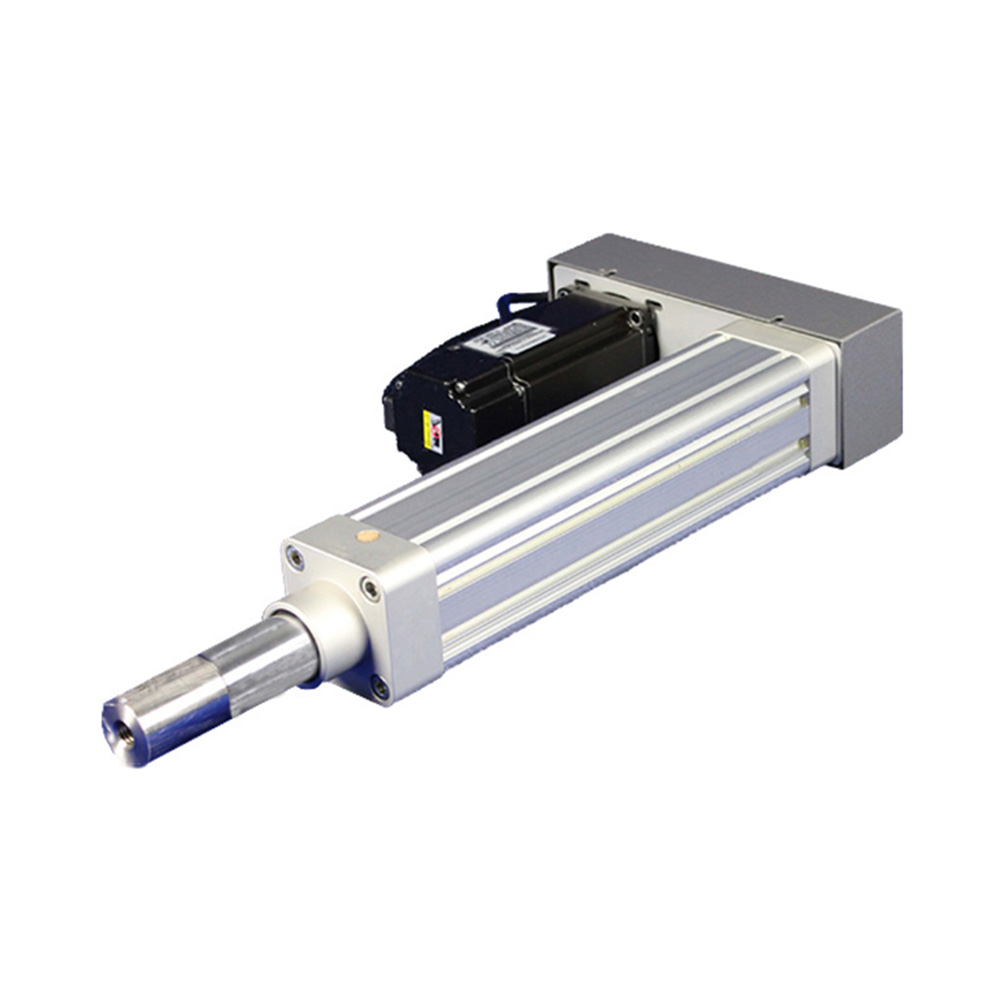
When purchasing an electric cylinder, price is often one of the first considerations. However, the electric cylinder price can vary significantly depending on its mechanical design, drive system, load capacity, stroke length, positioning requirements, and customization needs.
Understanding these factors helps equipment manufacturers and purchasing teams compare products more accurately and select a suitable solution without paying for unnecessary specifications.
There is no single standard price for all electric cylinders. Different models can have significantly different costs because they are designed for different operating conditions and performance requirements.
For example, a compact electric cylinder for light-duty positioning has different requirements from a heavy-duty servo electric cylinder used in an automated production line.
The main product categories include:
Standard electric cylinders: Designed for general industrial positioning and linear motion applications.
Ball screw electric cylinders: Suitable for applications requiring controlled movement, relatively high thrust, and precise positioning.
Belt-driven electric cylinders: Often used for longer strokes and higher-speed linear movement.
Heavy-duty electric cylinders: Designed for higher loads and demanding operating conditions.
Custom electric cylinders: Developed according to specific equipment dimensions, mounting requirements, motion parameters, and control systems.
When requesting an electric cylinder quotation, buyers should provide the technical requirements rather than compare prices based only on product appearance.
Several technical factors determine the manufacturing cost and final price of an electric cylinder.
The drive mechanism is one of the most important factors affecting electric cylinder cost.
Common drive options include ball screw and belt drive systems.
Ball Screw Electric Cylinder
A ball screw electric cylinder converts rotary motor movement into linear motion through a ball screw mechanism. It is commonly selected for applications requiring controlled positioning, higher thrust, and good repeatability.
Its cost depends on screw diameter, lead, length, precision grade, bearing arrangement, and other mechanical components.
Belt Driven Electric Cylinder
A belt-driven electric cylinder uses a timing belt to transmit motion. It is suitable for applications requiring longer travel distances and relatively high operating speeds.
Its price is influenced by belt specifications, pulley design, guide structure, stroke length, and load requirements.
The best option depends on the actual application. A more expensive drive mechanism does not necessarily provide better value if its performance advantages are not required.
Stroke length refers to the linear travel distance of the electric cylinder.
A longer stroke generally requires additional mechanical components, such as a longer screw or belt, guide structure, and supporting housing.
This can increase material costs and affect the overall design.
When selecting an electric cylinder, specify the actual working stroke rather than simply choosing the longest available model. An appropriately selected stroke can help control both equipment dimensions and purchasing costs.
Load capacity is another major factor affecting electric cylinder price.
The required thrust depends on several operating conditions:
Workpiece weight
External resistance
Acceleration and deceleration
Mounting orientation
Friction and mechanical efficiency
Duty cycle and operating frequency
An electric cylinder used for horizontal material transfer may require a different thrust capacity from one used for vertical lifting or pressing.
Oversizing the cylinder can increase cost, motor requirements, and equipment dimensions. Undersizing it may lead to insufficient performance or premature component wear.
For this reason, load calculations should consider both static and dynamic operating conditions.
The motor and control system also influence the total electric cylinder cost.
Common motor configurations include:
Servo motors
Stepper motors
Other application-specific motor configurations
Servo-driven electric cylinders are often selected for applications requiring flexible speed control, acceleration adjustment, and coordinated motion.
Stepper motor configurations may be suitable for certain positioning applications with appropriate load and control requirements.
The final price also depends on motor power, encoder configuration, driver selection, communication protocols, and integration requirements.
Different automation applications have different positioning requirements.
For example, general material transfer may not require the same positioning performance as precision assembly, inspection, or component insertion.
Higher positioning requirements may involve more precise mechanical components, suitable feedback systems, better assembly processes, and additional testing.
It is important to distinguish between positioning accuracy and repeatability when comparing electric cylinder specifications.
Buyers should communicate the actual accuracy requirements and operating conditions to the manufacturer before requesting a quotation.
Standard electric cylinders are generally more straightforward to manufacture and configure.
However, many OEM equipment manufacturers require customized solutions, such as:
Special stroke lengths
Non-standard mounting interfaces
Customized cylinder dimensions
Special motor mounting positions
Integrated sensors or limit switches
Multiple-axis coordination
Special operating environments
Customized connection and control requirements
Custom engineering and manufacturing may increase the initial electric cylinder price. However, a properly designed custom solution can simplify machine integration and reduce additional modification work during equipment assembly.
When comparing electric cylinder suppliers, it is important to evaluate more than the quoted price.
|
Comparison factor |
What to check |
|---|---|
|
Drive type |
Ball screw or belt driven |
|
Stroke length |
Actual working travel |
|
Load capacity |
Required thrust under operating conditions |
|
Speed |
Maximum and working speed |
|
Positioning |
Accuracy and repeatability |
|
Motor |
Servo, stepper, or other configuration |
|
Guide structure |
Load support and motion stability |
|
Service life |
Duty cycle and operating environment |
|
Customization |
Mounting, dimensions, and interfaces |
|
Technical support |
Drawings, selection, and integration assistance |
A low-priced electric cylinder may not be the most economical choice if it requires additional modifications or cannot meet the application's operating requirements.
For OEM manufacturers, the total cost of ownership should also include installation, maintenance, replacement, and production downtime.
Selecting a suitable electric cylinder requires balancing technical performance and purchasing cost.
The following steps can help simplify the selection process.
Identify the machine or equipment in which the electric cylinder will be installed.
Typical applications include:
Automated assembly equipment
Pick-and-place systems
Packaging machinery
Material handling systems
Industrial inspection equipment
Positioning and clamping systems
Automated production lines
Different applications require different motion characteristics and mechanical configurations.
Before requesting an electric cylinder quotation, prepare the following information:
Required stroke length
Maximum load and required thrust
Working speed
Positioning accuracy and repeatability
Installation orientation
Operating frequency and duty cycle
Motor and control requirements
Available installation space
Providing these details helps manufacturers recommend an appropriate model and prepare a more accurate quotation.
Do not select a ball screw or belt-driven model based only on price.
Consider the required stroke, speed, thrust, positioning performance, and expected operating conditions.
A suitable drive mechanism can improve the overall performance and cost-effectiveness of the automation system.
For non-standard automation equipment, the manufacturer's engineering capabilities are particularly important.
A reliable electric cylinder manufacturer should be able to provide technical selection assistance, mechanical drawings, customized mounting solutions, and support during equipment integration.
This is especially important for OEM customers developing specialized machinery.
Standard electric cylinders can meet many general-purpose motion requirements. However, they may not always match the mechanical structure or operating conditions of customized equipment.
A custom electric cylinder can be designed around the actual machine requirements.
Depending on the application, customization may include:
Customized stroke and overall dimensions
Ball screw or belt-driven transmission
Different motor configurations
Special mounting structures
Customized load and speed requirements
Multiple-axis motion coordination
Integration with existing automation control systems
For equipment manufacturers, customized linear motion components can help simplify machine design and improve compatibility with the complete automation system.
The goal is not simply to purchase a more powerful electric cylinder, but to obtain a motion solution that matches the actual application.
To receive an accurate quotation, buyers should provide sufficient technical information to the supplier.
A basic inquiry should include:
Product type: electric cylinder
Required stroke: working travel distance
Load: workpiece and external force
Speed: required operating speed
Accuracy: positioning and repeatability requirements
Motor: preferred motor type, if available
Quantity: estimated order quantity
Application: machine or equipment type
If a technical drawing or 3D model is available, providing it can help the manufacturer understand the installation requirements and evaluate the design more efficiently.
For customized projects, discussing the application with the engineering team before finalizing the product configuration can help avoid unnecessary costs.
KNK Technology specializes in the development and manufacturing of industrial linear motion products for automation equipment.
Its product range includes linear modules, electric cylinders, linear motor modules, gear rack linear modules, PPU cam pick-and-place units, and precision conveying systems.
For OEM equipment manufacturers and automation system integrators, selecting a suitable linear motion component involves more than comparing individual product prices. Mechanical compatibility, motion performance, installation requirements, and long-term operating stability should also be considered.
KNK Technology provides customized linear motion solutions based on different equipment requirements.
Whether your project requires a standard electric cylinder or a customized linear motion assembly, providing the application details and technical parameters is a practical starting point for product selection and quotation.
Contact KNK Technology to discuss your electric cylinder requirements and request a suitable solution.
Electric cylinder prices depend on drive mechanism, stroke length, thrust, speed, positioning requirements, motor configuration, and customization. Products with different specifications are not directly comparable.
Not necessarily in every configuration. The price depends on component specifications, dimensions, and manufacturing requirements. Ball screw and belt-driven cylinders also serve different motion applications, so buyers should compare products based on their actual operating requirements.
Generally, yes. A longer stroke may require longer transmission components, guide structures, and supporting housings, which can increase manufacturing costs.
Yes. Many manufacturers offer customized electric cylinders based on stroke length, load capacity, motor configuration, mounting dimensions, and application requirements. The available customization options depend on the manufacturer's engineering and production capabilities.
The most useful information includes stroke length, load, thrust, speed, positioning requirements, motor configuration, installation dimensions, and application details. Technical drawings can also help improve quotation accuracy.
Start by defining the actual operating requirements. Avoid unnecessary oversizing, select an appropriate drive mechanism, confirm the required positioning performance, and work with a manufacturer that can provide suitable standard or customized configurations.