Industrial linear actuator systems are motion control solutions designed to convert rotary motion or other forms of energy into controlled linear movement. They are widely used in industrial automation equipment, manufacturing machinery, assembly systems, and precision positioning applications.
A typical industrial linear actuator system consists of a drive mechanism, motor, linear guide, mechanical structure, and control components. Depending on the application, it may also include sensors, feedback devices, and a motion controller.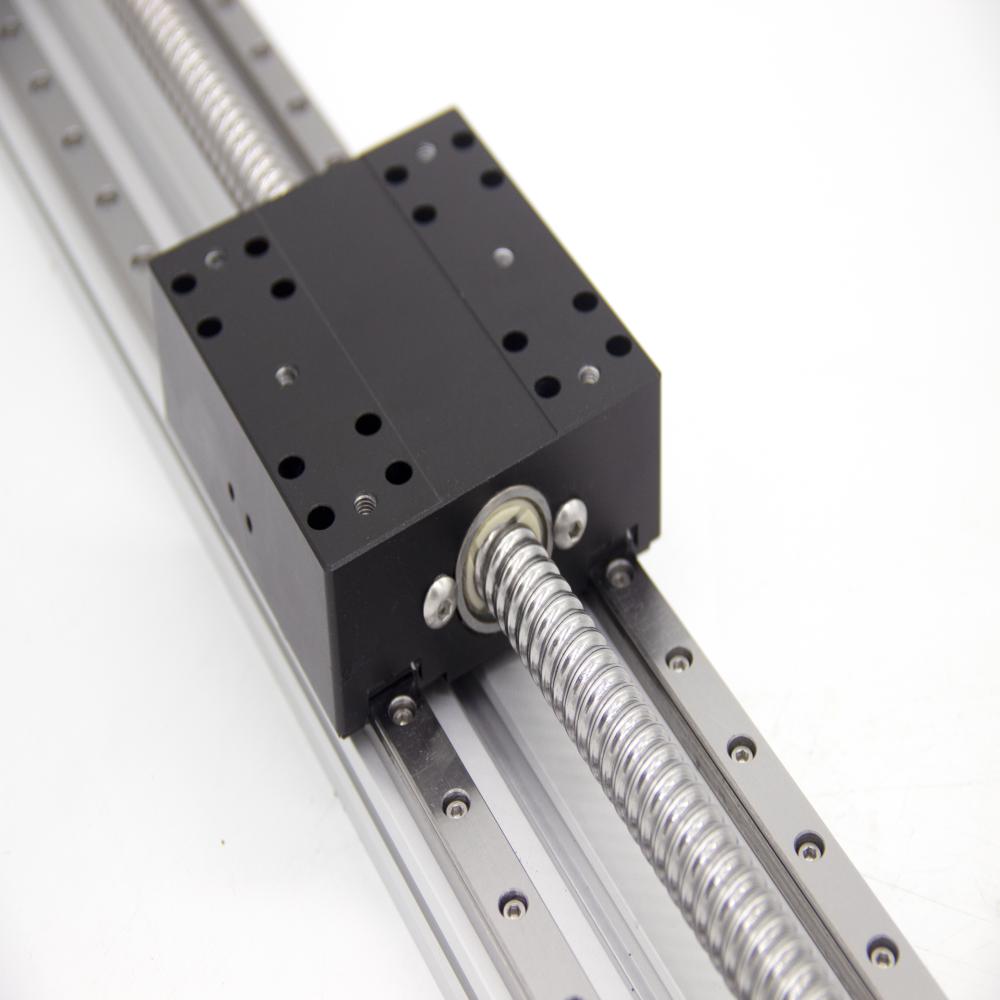
Unlike simple manual positioning devices, industrial linear actuator systems can provide automated movement with adjustable speed, stroke length, positioning accuracy, and operating sequences.
They are commonly used to:
Move workpieces between different processing stations.
Position components during automated assembly.
Control the movement of machine tools and inspection equipment.
Adjust the height or position of industrial components.
Perform repetitive pushing, pulling, lifting, and positioning operations.
For equipment manufacturers, selecting the right linear actuator system is important for achieving stable machine operation, improving production efficiency, and meeting specific motion requirements.
The working principle of an industrial linear actuator system depends on its drive mechanism.
In many electric linear actuator systems, a motor generates rotary motion, which is transferred through a mechanical transmission mechanism to produce linear movement.
For example, a ball screw actuator converts the rotation of a screw into the linear movement of a nut. A belt-driven actuator uses a motor and pulley system to move a slider along a guide rail.
The basic operating process includes:
Motion command: A controller sends a movement command to the motor.
Power transmission: The motor drives the screw, belt, rack, or another transmission mechanism.
Linear movement: The transmission mechanism moves the slider or actuator rod along the required direction.
Position control: Sensors or feedback systems help monitor and control the movement.
Repeat operation: The system performs the required motion sequence according to the machine program.
The final performance depends on the actuator structure, motor selection, mechanical design, control method, and operating conditions.
Different industrial applications require different actuator structures. The following are common types used in automated machinery.
Ball screw linear actuator systems use a rotating screw and ball nut assembly to convert rotary motion into linear movement.
Key characteristics include:
High positioning capability when properly designed and controlled.
Suitable for applications requiring controlled linear movement.
Available in different screw pitches and stroke lengths.
Commonly used in precision machinery and automated positioning equipment.
Typical applications include CNC equipment, inspection machines, precision assembly systems, and automated production equipment.
Belt-driven linear actuator systems use a motor-driven pulley and timing belt to move a slider along a linear guide.
Their main characteristics include:
Suitable for relatively long travel distances.
High-speed movement potential.
Smooth motion when properly configured.
Flexible installation and multi-axis integration.
Belt-driven systems are often used in material handling equipment, packaging machinery, automated loading systems, and long-stroke positioning applications.
Gear rack linear actuator systems use a pinion gear engaging with a linear rack to generate linear movement.
Typical characteristics include:
Suitable for long-distance linear travel.
Flexible mechanical configuration.
Can be designed for different load requirements.
Applicable to large industrial machinery and automation lines.
They are commonly used in heavy machinery, gantry systems, industrial handling equipment, and large-scale automated positioning systems.
Linear motor actuator systems generate linear force directly through electromagnetic interaction, without requiring a conventional rotary-to-linear transmission mechanism.
Their characteristics may include:
Direct linear drive.
High acceleration potential.
Smooth motion control.
Suitability for demanding precision applications.
Linear motor systems are often considered for semiconductor equipment, electronic manufacturing, precision inspection, and high-speed automation applications.
Electric cylinder actuator systems integrate an electric motor and mechanical transmission into a compact actuator structure. They are designed for controlled pushing, pulling, lifting, and positioning operations.
Common features include:
Programmable stroke and movement.
Integration with servo or other suitable motor systems.
Adjustable speed and positioning parameters.
Compatibility with automated control systems.
Electric cylinders are widely used in assembly machinery, material handling, industrial pressing, and automated adjustment equipment.
Understanding the main components helps equipment manufacturers select and configure an appropriate system.
|
Component |
Main Function |
|---|---|
|
Drive motor |
Provides the power required for movement |
|
Transmission mechanism |
Converts motor output into linear motion |
|
Linear guide |
Supports and guides the moving components |
|
Slider or carriage |
Carries the external load |
|
Mechanical frame |
Provides structural support and installation stability |
|
Control system |
Manages movement commands and operating sequences |
|
Sensors and feedback devices |
Monitor position and operating status |
The selection of each component should be based on the application's actual requirements.
For example, a long-stroke material handling system may prioritize travel distance and speed, while a precision assembly machine may require more attention to positioning accuracy, repeatability, and mechanical rigidity.
Industrial linear actuator systems are used in many industries because they provide controllable movement for automated equipment.
In automated assembly equipment, linear actuators move components between workstations, position parts for assembly, and support repetitive production processes.
Typical applications include:
Component feeding and transfer.
Automated insertion and assembly.
Workpiece positioning.
Multi-station production equipment.
Packaging and printing equipment often requires coordinated linear movement to transport materials, adjust machine components, and control processing positions.
Linear actuator systems can be integrated into feeding mechanisms, adjustment units, cutting systems, and automated handling equipment.
Electronic manufacturing equipment may require controlled movement, repeatable positioning, and compact mechanical structures.
Linear actuator systems can be used in inspection platforms, component handling equipment, precision positioning devices, and automated production machines.
In medical and laboratory automation, linear actuators can support sample handling, positioning, automated testing, and equipment adjustment.
The actuator should be selected according to the required movement profile, installation space, cleanliness requirements, and operating environment.
Linear actuator systems are commonly integrated into machine tools, measuring equipment, and inspection systems.
They provide controlled movement for workpiece positioning, tool adjustment, measurement platforms, and automated testing processes.
Choosing an appropriate industrial linear actuator system requires more than comparing motor power or actuator dimensions. Equipment manufacturers should evaluate the complete motion requirements.
Determine the total moving load, including workpieces, fixtures, mounting plates, and other attached components.
Also consider the direction of movement, acceleration, deceleration, and any external forces acting on the actuator.
Stroke length refers to the required linear travel distance.
Different transmission mechanisms are suitable for different travel requirements. Long-stroke applications may benefit from belt-driven or rack-and-pinion structures, while shorter precision movements may use ball screw systems.
The required operating speed should be evaluated together with acceleration, deceleration, cycle time, and positioning stability.
A system designed for high-speed movement must also have sufficient mechanical rigidity and an appropriate motor and control configuration.
Positioning accuracy and repeatability are important in automated assembly, inspection, and precision processing.
The actual performance depends on the transmission mechanism, guide system, motor, feedback devices, installation conditions, and control parameters.
The actuator must fit the available machine space and match the equipment's mechanical structure.
Consider mounting direction, actuator width and height, cable routing, motor location, and connection interfaces.
The actuator should be compatible with the machine's control architecture.
Before selection, confirm motor type, driver requirements, control signals, feedback method, and communication compatibility.
Standard linear actuators may not meet the requirements of every industrial machine. OEM equipment manufacturers often need customized motion solutions based on their machine structure and production process.
A custom industrial linear actuator system can be configured according to the following requirements:
Custom stroke length: Match the required travel distance and installation space.
Drive mechanism selection: Choose belt drive, ball screw, gear rack, linear motor, or electric cylinder structures.
Motor configuration: Select a suitable servo motor, stepper motor, or other drive option.
Load requirements: Configure the mechanical structure according to the moving load and external forces.
Multi-axis integration: Combine multiple linear motion modules to create coordinated movement systems.
Mounting customization: Adapt installation interfaces and mechanical dimensions to the customer's equipment.
Control integration: Configure the actuator according to the machine's control requirements.
Working with an experienced linear motion manufacturer can help OEM customers evaluate the mechanical design, select suitable components, and develop a solution that matches their equipment requirements.
KNK Technology focuses on the research, development, production, and supply of industrial linear motion products and automation solutions.
Our product range includes linear modules, electric cylinders, gear rack linear modules, linear motor modules, precision linear motion components, and other customized motion solutions.
For industrial equipment manufacturers, KNK can provide support in areas such as:
Linear motion product selection.
Custom stroke and structural configurations.
Different drive mechanism options.
Multi-axis motion system integration.
OEM and made-to-order product requirements.
Technical communication based on actual equipment applications.
Whether you are developing automated assembly machinery, precision inspection equipment, or customized production lines, selecting a suitable industrial linear actuator system is an important step toward achieving reliable machine performance.
Contact KNK Technology to discuss your application requirements and explore a suitable linear motion solution.
An industrial linear actuator system is a mechanical motion solution that produces controlled linear movement. It typically includes a motor, transmission mechanism, linear guide, mechanical structure, and control components.
Common types include ball screw linear actuators, belt-driven linear actuators, gear rack actuators, linear motor actuators, and electric cylinder actuators.
A linear actuator is a broad term describing a device that produces linear movement. An electric cylinder is a specific type of electric linear actuator, generally designed with an integrated motor-driven transmission structure.
Ball screw actuators are often selected for applications requiring controlled positioning and suitable load transmission. Belt-driven actuators are commonly considered for longer strokes and higher-speed travel. The final choice depends on load, speed, accuracy, stroke, and operating conditions.
Yes. Industrial linear actuator systems can be customized in terms of stroke length, load capacity, drive mechanism, motor configuration, mounting dimensions, and control requirements.
They are widely used in industrial automation, packaging, printing, electronics manufacturing, semiconductor equipment, medical equipment, machine tools, inspection systems, and automated assembly lines.
Important information includes load weight, stroke length, required speed, positioning accuracy, operating cycle, installation dimensions, mounting direction, and control requirements.